
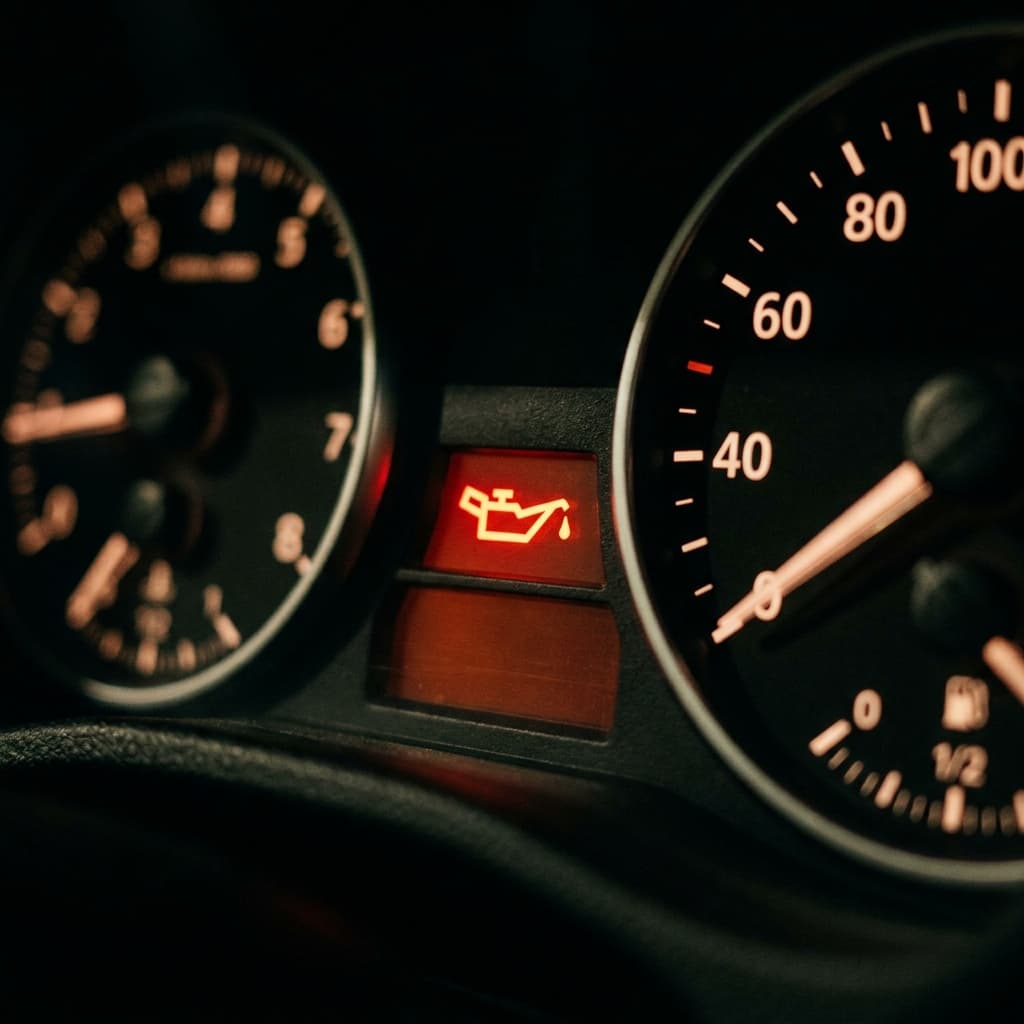
If your oil light came on while driving, this isn't the time to leave it for later. Of all the lights that can appear on your dashboard, this is one of the few that can cause serious engine damage within minutes if you don't address it in time.
But before you panic: it doesn't mean the engine is about to seize right now either. It depends on what's going on. In this article we explain how to tell the difference and what to do.
What is the oil light?
Oil is what keeps the engine's internal parts moving without destroying each other. Without oil, or with low oil pressure, metal works against metal and the damage is fast and irreversible.
The oil light turns on when the system detects that oil pressure has dropped below normal. It doesn't always mean there's no oil — sometimes there's enough oil but the pressure isn't right. Either way, the engine is warning you that something is wrong.
Why does it come on? The most common causes
There isn't a single reason. It can be something simple or something that needs immediate attention. These are the most frequent causes:
Low oil level
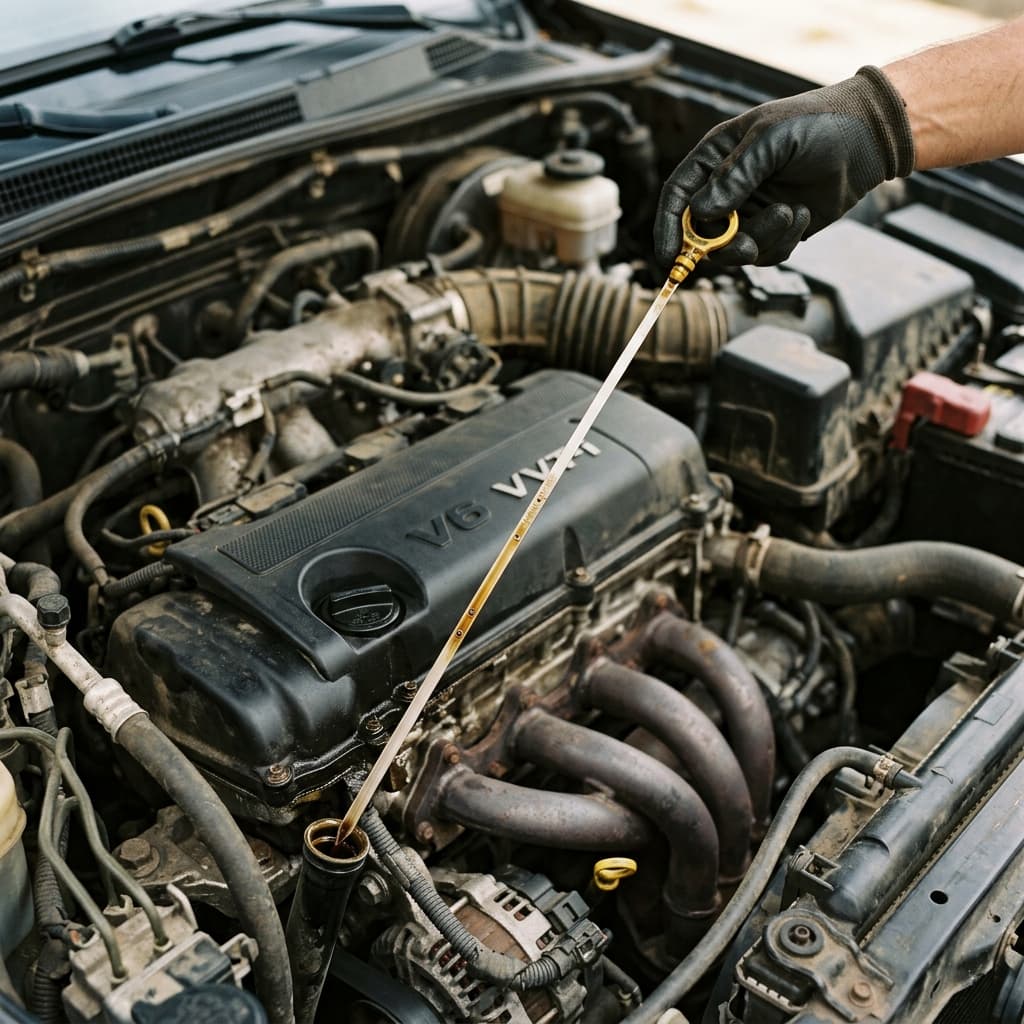
The most frequent cause. If you haven't checked the oil in a while or the car consumes more than usual, the level may have dropped enough to trigger the warning. It's easy to check: with the engine cold, open the hood and check the dipstick.
Dirty or degraded oil
Oil doesn't last forever. Over time it degrades, loses viscosity, and stops lubricating properly. If you haven't changed it in a long time, the system may not be working with the necessary efficiency.
Oil leak
If the car has a leak — from a gasket, seal, or crack — the level drops without you noticing. A clue is seeing stains on the ground where you usually park.
Oil pump problems
The pump is responsible for circulating oil throughout the engine. If it fails, pressure drops even when there's enough oil. This case is more serious and needs immediate attention.
Faulty sensor
In some cases the sensor that measures pressure fails and gives an incorrect reading. But this isn't something you can assume on your own — always check the level first before concluding it's the sensor.
Can you keep driving?
Here the answer is more direct than with other lights.
Pull over ASAP
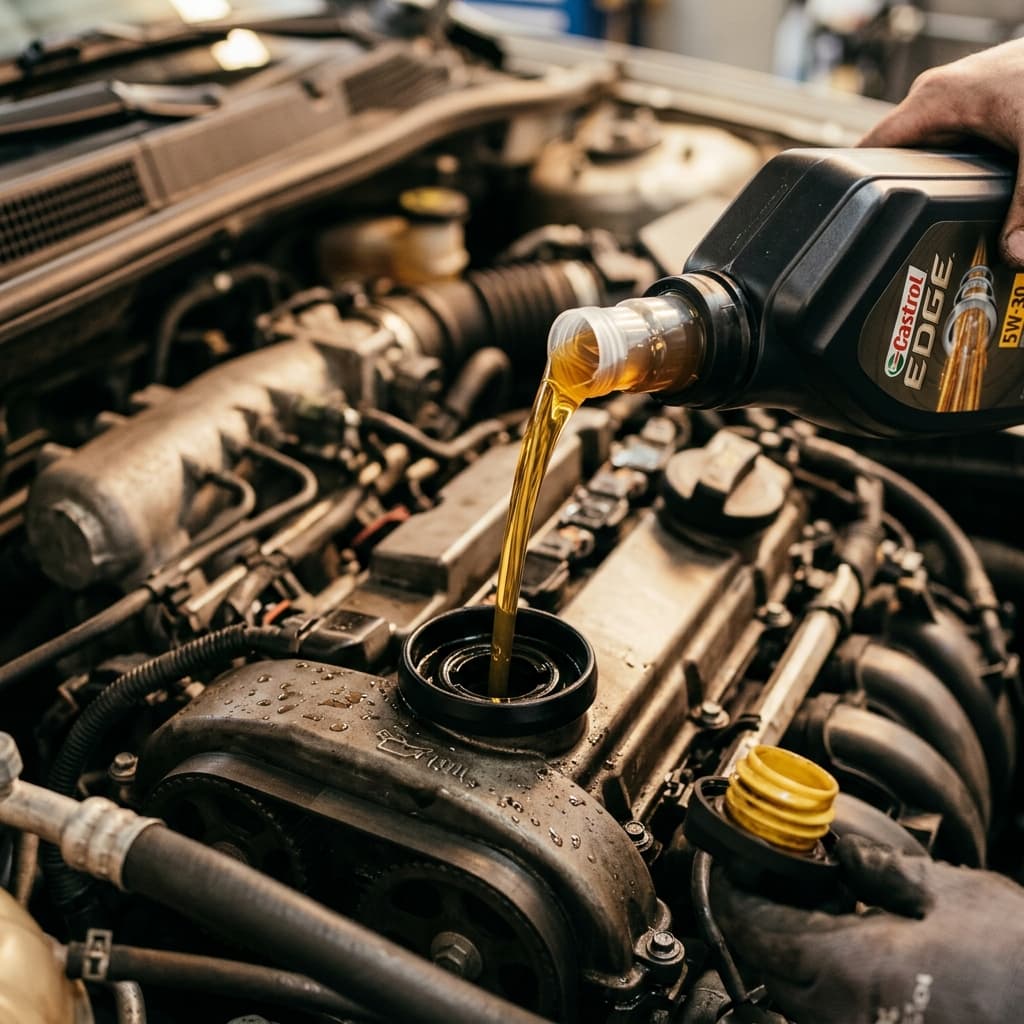
Don't wait to get home. Don't wait for the next traffic light. Find a safe spot, turn off the engine, and check the oil level. If it's very low or there's no oil, don't start the car again without adding some.
Probably normal
On some cars it's normal for the oil light to come on briefly at startup, before the pressure normalizes. If it turns off within the first few seconds and the car runs fine, it's probably not an emergency. Still, check the level at your next opportunity.
Don't continue
Metallic noises with the oil light on are a sign that the engine is no longer getting enough lubrication. In that case, stopping is the only right option.
What do you do now? Three steps
Stop the engine and let it cool down
Don't check the oil with the engine hot. Wait at least ten minutes before opening the hood.
Check the level with the dipstick
Pull out the dipstick, wipe it with a rag, reinsert it, and check where the oil marks. If it's below the minimum, you need to add oil before continuing.
Ask if you're not sure what to do
If the level looks fine but the light stays on, or if you can't find the dipstick, or you simply don't know what you're looking at — no problem. Describe the situation to Juan Mecánico and in seconds he'll tell you what's happening and what to do.

“Tell me what you saw: the light, whether the car is making any noise, when the last oil change was. In seconds I'll tell you what's going on and what to do.”
